Showing posts with label 1960s. Show all posts

Monday, March 16, 2026

Railhead: The Nightcrawler. The Nightcrawler. The train from Denver, Colorado, to Billings, Montana.

Railhead: The Nightcrawler. The train from Denver, Colorado...:   I had no idea that this is what this train was called.  Thanks go out to MKTH for letting me know! I've been looking into local passen...

The Nightcrawler. The train from Denver, Colorado, to Billings, Montana.


I had no idea that this is what this train was called.  Thanks go out to MKTH for letting me know!

I've been looking into local passenger train travel as part of my efforts with a novel.  What I found is that I knew very little about it.  Probably more than your average bear, but that's about it.  I'd long assumed that a person could board a train in Casper in 1916 and take the train to Douglas or Cheyenne, and then return that evening, but the more I looked into it, that was just an assumption.

I'm not the one who figured out how it really worked. That goes to MKTH.  the result is fascinating.

It turns out I was right sort of. The Burlington Northern ran a train from Denver Colorado, to Billings Montana, and vice versa, daily.  This article takes a look at it.

What I imagined, for novel purposes, was boarding in Casper, and traveling to Douglas.  I may, as I work at it, make it Cheyenne.

Union Station, Denver Colorado

Union Station, Denver Colorado

Union Station as viewed from in front of Denver's Oxford Hotel.


Anyhow, this is a really interesting article and give a really good look at what traveling on the Denver to Billings night train was like, complete with stops for food, which is something I hadn't considered.  It also picked up mail, and my source indicates, cream, something I also hadn't figured, but that may explain why the creamery my family owned was just one block from the Burlington Northern.  In fact it probably does.

Jersey Creamery Inc.


The trip took 19 hours.  It take 8 hours today by car, assuming good weather conditions, and not figuring in stops for food, etc.  The train moved about 34 miles an hour.

We'll look at the return trip first.  The train having come up from Cheyenne boarded there at 12:49 in the morning.  Uff.

It got to Casper at 6:20 in the morning, having made a couple of stops along the way.

Burlington Northern Depot, Casper Wyoming

What I imagined?  

Not really.  And I also had no idea that there was a major cafe right off the railroad.  This article deals with the early 1960s, but I can see that some variant of it was there decades prior.  That makes piles of sense, really.  Of course there would be.  How else would people eat if they were making the long journey?  

It simply hadn't occurred to me.

In my imaginary trip., that'd be it.  If I stuck with the Douglas variant of this, my protagonist would be boarding the train in the early, early morning hours and get in a couple of fitful hours of sleep, probably interrupted by a stop in little Glenrock.  Indeed, this train stopped everywhere to pick up mail, and a few passengers.

What about the other way around?

Well that was a day trip, but as we can see, the 19 hours the train traveled in total meat that it took a good 6.5 hours to travel just from Cheyenne to Casper.  Going the other way would mean the same thing, and likely a bit in reverse.  The 6.5 hour trip from Cheyenne to Casper was the second major leg of the trip (it'd still stop in numerous small towns in between), the first being Denver to Cheyenne.  Going the other way around meant that the Cheyenne to Denver leg was about five hours.  The article notes that the train actually arrived from Billings 40 minutes before its 7:00 p.m. departure.  So it arrived, more or less, at 6:00 p.m. and changed crews.  That would have meant that it left Cheyenne, on the way to Denver, at about 1:00 p.m. or so, which makes sense.  Passengers traveling all the way to Denver would have eaten lunch there.

By extension, however, that meant that the train left Casper at about 6;00 in the morning, approximately.

These times are almost unimaginable now.  When we had good air travel to Denver I'd frequently board United Express here about 6;00 a.m. and be in Denver about 8:30, and take the train downtown and be to work by 9.  I'd be back in Casper on the redeye about 10:00, or if I was lucky, 6:00.

And when I go to Cheyenne, I drive.  Normally that takes me a little under three hours.  I haven't stayed overnight in Cheyenne for years, although I recently had an instance which should really cause me to.

Anyhow, if I'm looking at 1916, why not just drive?

Well, in 1916 most Americans, including most Wyomingites, didn't own automobiles, and those who did, didn't normally make long trips with them.  They frankly weren't that reliable, even though they were simple.  Roads also tended to be primitive, and not really maintained for weather.  Could a person have driven from Casper to Cheyenne in a Model T, the most likely car they would have had?  Yes, but it wouldn't have been any faster.  It may well have been slower, quite frankly, as well as much riskier.

Saturday, June 24, 2023

Thursday, July 22, 2021

Friday, July 22, 1921. The Douglas Aircraft Company founded.

On this day in 1921 the legendary Douglas Aircraft Company was founded in Santa Monica, California.

A manufacturer of legendary aircraft, particularly the DC-3, the company merged with McDonnell Aircraft in 1967.  The new McDonnell Douglas merged with Boeing in 1997.

Monday, September 28, 2020

Congress set to name "B47 Ridge"

In 1962 a B47 bomber crashed into an unamed ridge in the Paradise Valley region of Montana. All four crewmen were killed in the crash.

Shortly, the ridge will be named in remembrance of the event.

A BILL To designate a mountain ridge in the State of Montana as B47 Ridge.

Be it enacted by the Senate and House of Representatives of the United States of America in Congress assembled


SECTION 1.

SHORT TITLE. This Act may be cited as the B47 Ridge Designation Act.

SEC. 2.

DESIGNATION OF B47 RIDGE, MONTANA.  

(a) DESIGNATION.  

(1) IN GENERAL.

The unnamed mountain ridge located at 451440.89N, 1104338.75W 5 that runs south and west of Emigrant Peak in the 6 Absaroka Range in the State of Montana, which is 7 the approximate site of a crash of a B47, shall be 8 known and designated as B47 Ridge. 9

(2) REFERENCES.

Any reference in a law, map, regulation, document, paper, or other record of the United States to the ridge described in paragraph (1) shall be deemed to be a reference to B47 Ridge.

(b) AUTHORIZATION FOR PLAQUE.

(1) IN GENERAL.A plaque that memorializes the crash of the B47 (including denoting the names of the victims of the crash) may be installed on B 18 47 Ridge.

(2) FUNDING.

No Federal funds may be used to design, procure, install, or maintain the plaque authorized under paragraph (1).

Monday, May 25, 2020

Lex Anteinternet: A Memorial Day Reflection on the Second World War....

Lex Anteinternet: A Memorial Day Reflection on the Second World War....One poster noted that much expanded airline travel resulted from the war, and that certainly is the case.


Just prior to the war airliners were beginning to take on a recognizable form, with the DC-3 being a recognizable commercial aircraft that went on to do yeoman's service during the war as the C-47.


After the war, however, things really changed. Four engined wartime aircraft made four engined commercial aircraft inevitable.  By the 60s they were yielding to jets and modern air travel was around the corner.  It really took airline deregulation, however, which came in during the 1980s, to make air travel cheap.

Sunday, November 24, 2019

Lex Anteinternet: Apollo 12 Returns to Earth. November 24, 1969

Lex Anteinternet: Apollo 12 Returns to Earth. November 24, 1969:

Apollo 12 Returns to Earth. November 24, 1969

Apollo 12 and the USS Hornet.

On this day in 1969, the Apollo 12 crew rode their module back down to Earth.

The recovery was affected by the USS Hornet, the U.S. Navy's aircraft carrier that famously was used in World War Two.  The Hornet had been commissioned in 1943, decommissioned in 1947, and then recommissioned with a new angled flight deck 1953. At the time of her recommissioning she was a small aircraft carrier and she was decommissioned again in 1970, just the following year after this mission.  She was struck from the roles in 1989 and is now a museum ship in Alameda, California.

The Apollo 12 mission was a successful one, particularly in light of its frightening start when the Saturn rockets were struck twice by lightening during the launch.  Seismographers were left on the moon when the lunar capsule was launched back to the orbiting module and the launching apparatus' vibrations on the surface of the moon lasted for over an hour.

Thursday, November 14, 2019

Lex Anteinternet: November 14, 1969. Apollo 12 launched.

Lex Anteinternet: November 14, 1969. Apollo 12 launched.:

November 14, 1969. Apollo 12 launched.


It was, of course, a mission to the moon.

Lightening struck the Saturn rocket twice as it was lifting off, taking all three fuel cells offline.  Irrespective of that, it flew normally.

Wednesday, March 13, 2019

Pushing Pause on the Boeing 737 Panic.


Two Boeing 737 Max's have crashed in the last month or so, the most recent in Ethiopia where it resulted in tragic loss of life.

There's no denying that.

And that definitely needs to be looked into.

I'm not an air crash examiner by any means, and I don't really know enough to comment on this story. But then, neither do you, or any of those, outside learned air agencies perhaps.

So some things to keep in mind.

The 737 basic design goes back to 1967.  The 737 Max is simply the most updated, although certainly very updated, version of that old air frame.  People panicking over 737s should realize that just because its a 737, doesn't mean its a 737 Max.

And just because there's been two crash in close proximity in time doesn't mean there's anything actually wrong with the plane, actually.  Both airplanes that crashed were in foreign use and while the airlines that had them will no doubt maintain that their pilots are amongst the very best in the world, frankly if the pilot isn't an American pilot, they aren't.

Most nations, including nations that put in a lot of flight time, don't train anywhere near to the American standard.  American private pilots have knowledge that vastly exceeds the knowledge of many pilots that step into lesser commercial roles elsewhere, and American commercial pilots are not only second to none, there's no comparison everywhere.

Beyond that, the nature of reporting tends to dog pile on, but not evenly.  If the Russian airline Aeroflot was subject to the same standards nobody would ever get on a Russian airplane, but it isn't.  Aeroflot has had five times the number of deaths than any other airline in the world, with over 8,000 people losing their lives on their planes since they first started flying. And this in an airline that no doubt uses a lot of former military pilots who ought to know what they are doing.

Five times.

Finally, the number of manufacturers of aircraft have dwindled to an unstable few.  When commercial aviation got rolling the number of competing companies was vast.  Even at the start of the jet age that was still true.  Now, in the Western world we're down to Boeing and Airbus.

Airbus is a pan European aircraft manufacturer that competes neck and neck against Boeing, the sole American commercial aviation manufacturer.  Hurting Boeing, even accidentally, helps Airbus.  It's notable that European aviation agencies were very quick to ground Boeing.

Indeed, European bans were such that Boeing 737 Max's in the air had to re route and not land at European airports.  And that's just flat out dumb.   Safety would have required them to allow them to land at their destination, not re route.

Now, I'm not saying that European actions were calculated to hurt Boeing.  But I am cognizant that its always hard not to keep your home close to you in some fashion when problems break out.

Lawsuits and overreaction have driven the costs of private aircraft so high that only the wealthy can afford them and very few are made.  Overreaction could kill off American commercial manufacturing and certainly will hurt it.  A little prudential judgment may be in order.

Thursday, July 4, 2013

Pacific Aviation Museum: Sikorsky H3 Sea King

Pacific Aviation Museum: Sikorsky H3 Sea King


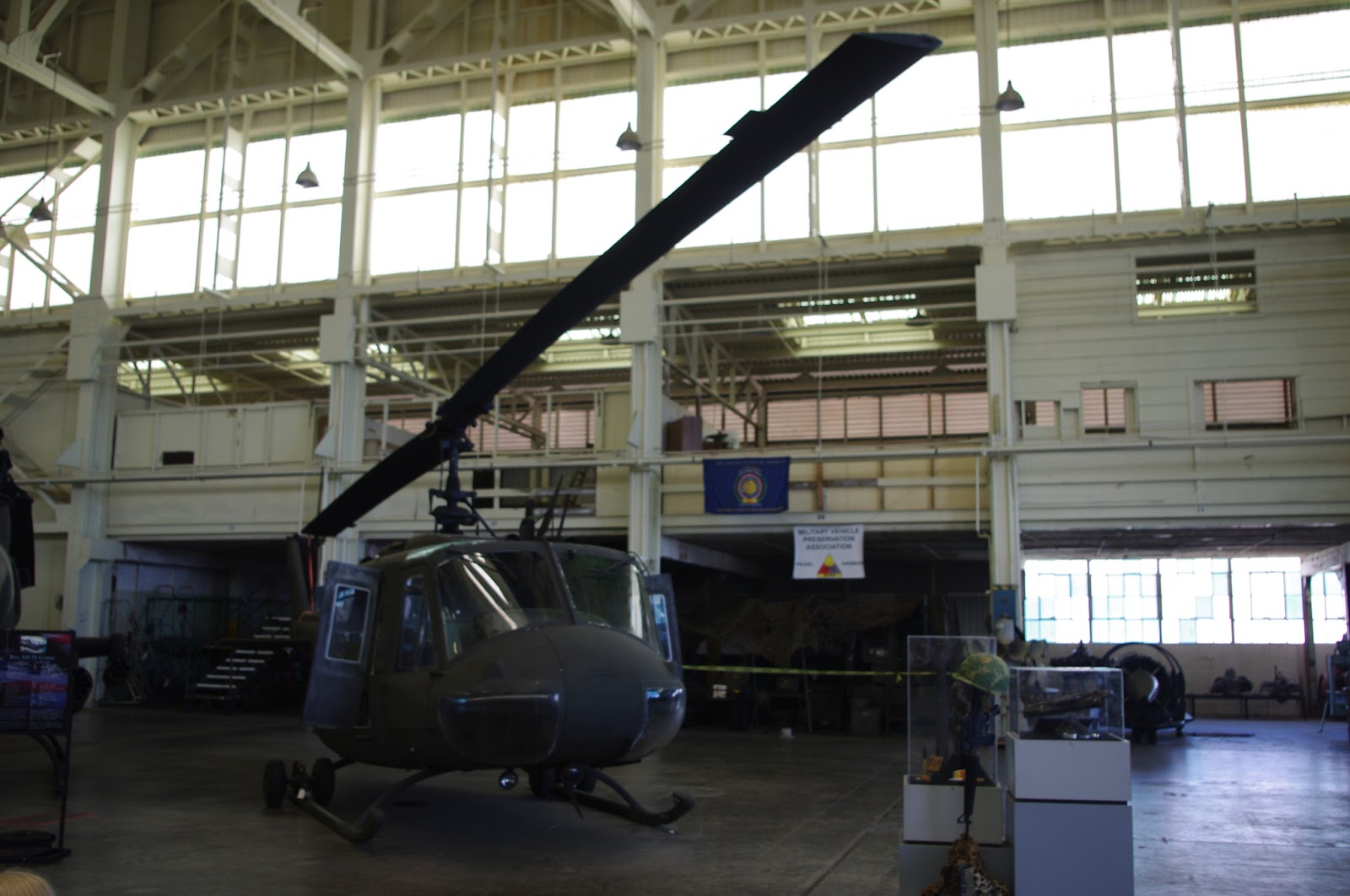
Pacific Aviation Museum: UH-1

Pacific Aviation Museum: UH-1

Pacific Aviation Museum: Cessna O-2

Pacific Aviation Museum: Cessna O-2


OV10 Bronco being rebuilt. As well as two SBD's on display in front of it.

(Thanks Dennis and Bill for the identification of this aircraft).

Pacific Aviation Museum: F5

Pacific Aviation Museum: F5


This F5 is a former South Korean Air Force F5 Tiger.  Eons ago, when I was in the National Guard, I had the experience of watching ROKAF F5s in a practice dogfight against USAF fighters, as the Korean jets attempted to break through an escort in order to take on a FB111.  Quite the thing to see.

Pacific Aviation Museum: F104 Starfighter.

Pacific Aviation Museum: F104 Starfighter.


Pacific Aviation Museum: F102 Delta Dart

Pacific Aviation Museum: F102 Delta Dart


Pacific Aviation Museum F4 Phantom

Pacific Aviation Museum F4 Phantom

Wednesday, November 23, 2011

Bell 206


 While driving around in the prairie, I saw this helicopter hovering very low to the ground, almost on the ground. It then began to move forward very fast, and flew almost directly overhead. Luckily I was able to get out in time and take a few pictures.

I suspect this is a Bell 206, which is a single engine or twin engine twin rotor multipurpose helicopter. They are made by the Bell Helicopter Textron company is Mirabel, Quebec. For more information, look here.